
IRATA Level 3 Rope Access Courses
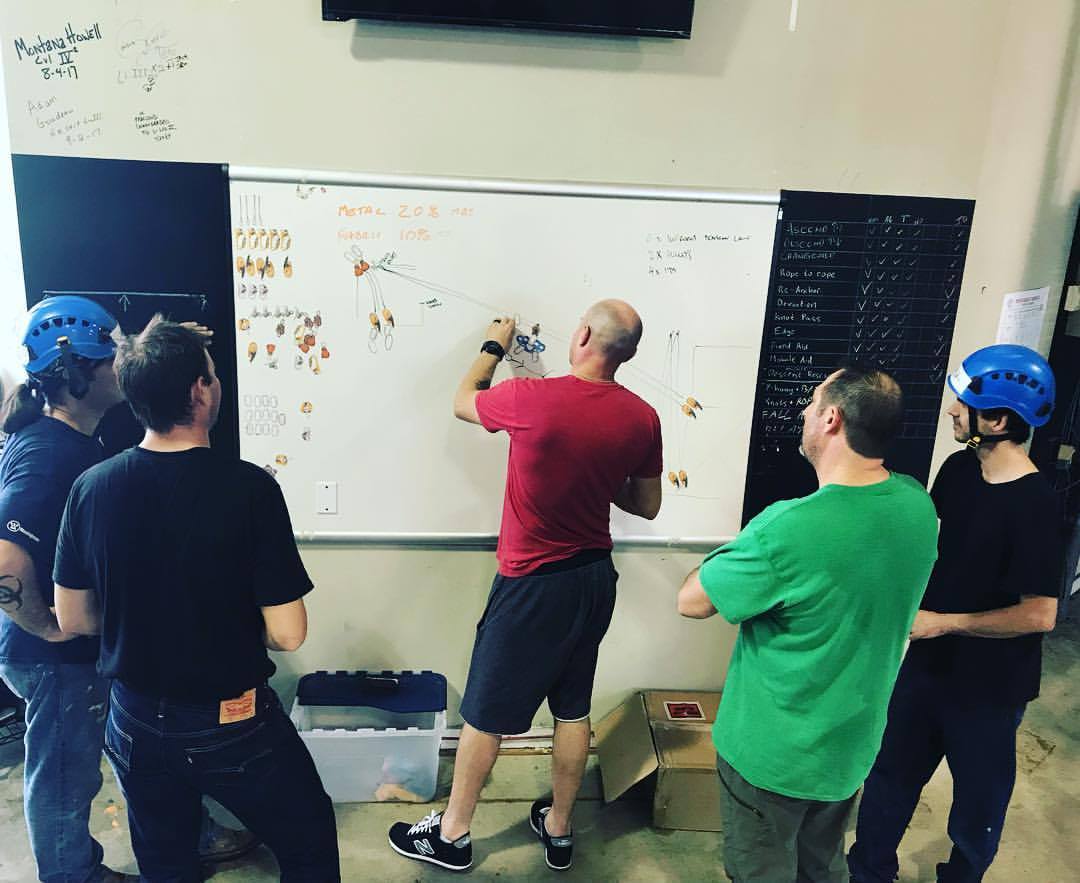
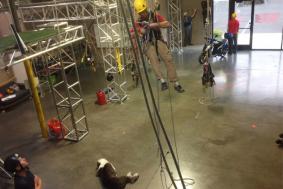
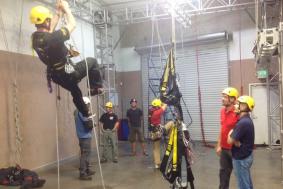
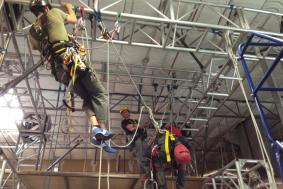
Perfect your rope handling skills with the IRATA Level 3 rope access course. This advanced course is designed for participants with prior training and experience, and successful completion makes finishers eligible to supervise teams carrying out activities where ropes and associated equipment are used to gain access to and from the work position. The IRATA Level 3 rope access course is undertaken over five days, with a four-day training period followed by a one-day assessment. All training and testing occurs under the watch of an IRATA Level 3 technician. Click here for pricing information on an IRATA certification.
To become eligible for this course, applicants must:
- Have passed IRATA levels I and 2 assessments
- Be an IRATA Level 2 technician with a minimum of twelve months and 1,000 hours of work experience as a Level 2 rope access technician
- An existing Level 3 technician must sign off on those hours
SKILLS STUDENTS WILL LEARN:
In this course, students will learn to operate the following subjects under the direct supervision of an IRATA Level 3 technician:
- Proper job planning, manpower assessment, and problem identification techniques
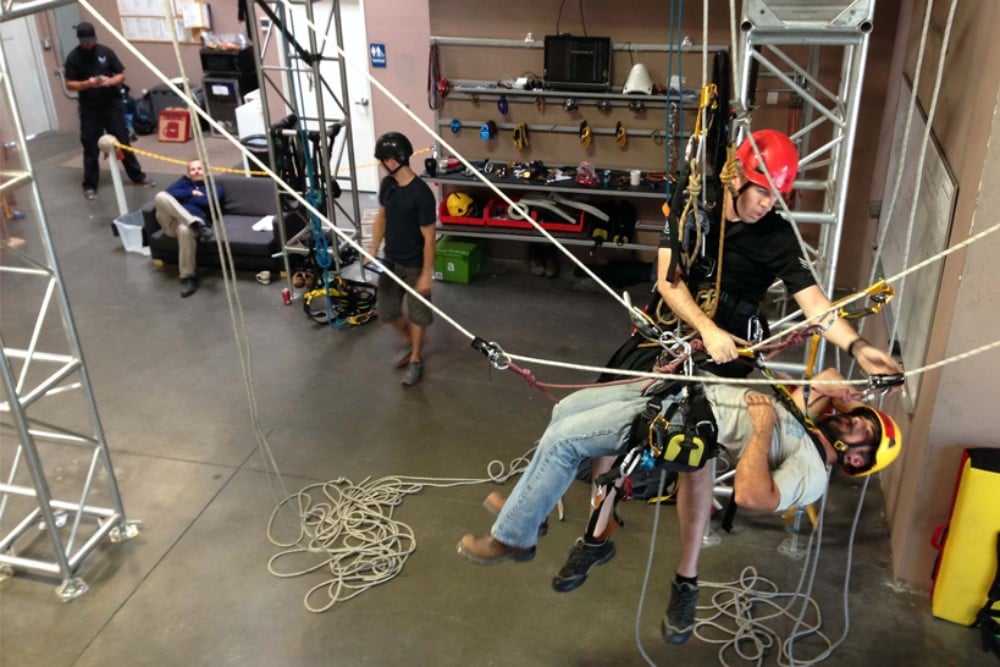
- Rescue methods for every possible situation, including worst-case scenarios
- Three-dimensional restraint casualty hauling methods
- In-depth knowledge of equipment capabilities, limits and best practices
- Application theory, including rescue planning, method statement amendments and relevant legislation adherence
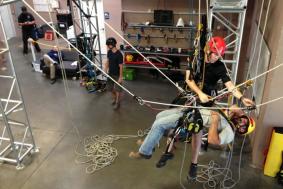
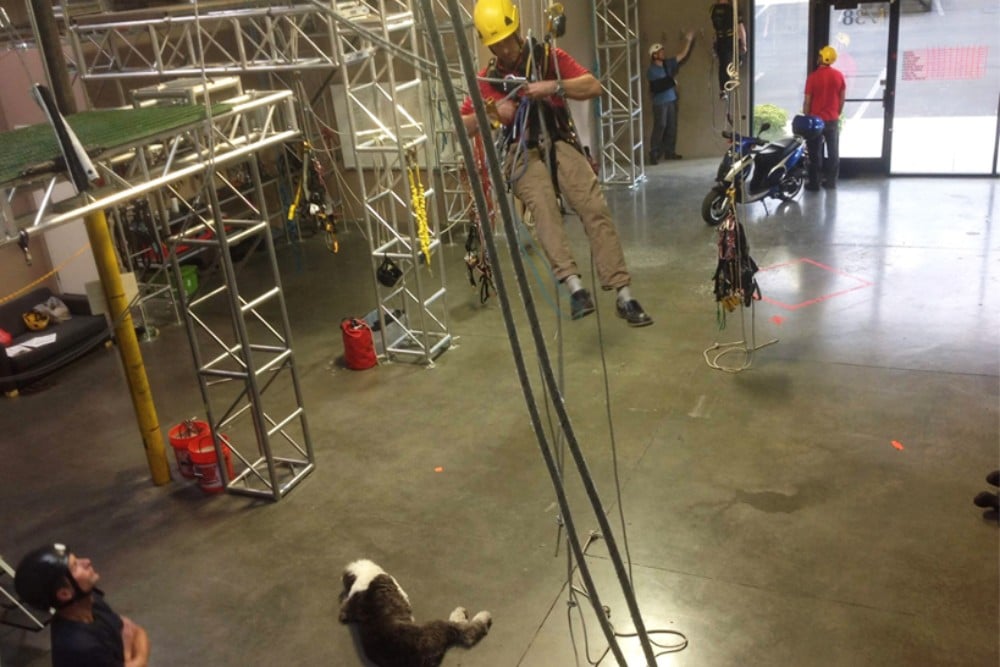
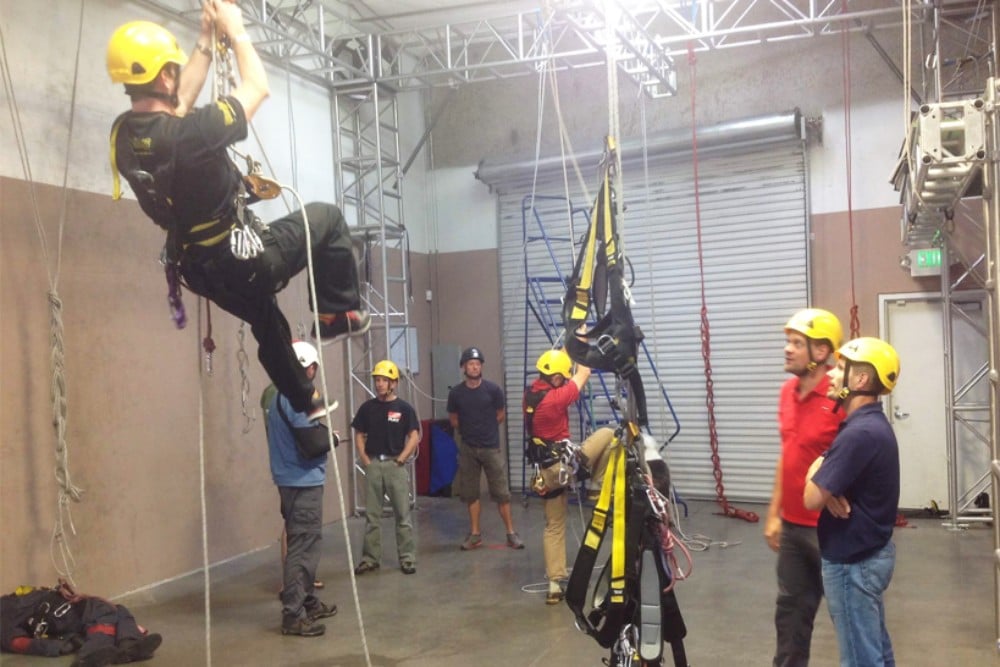
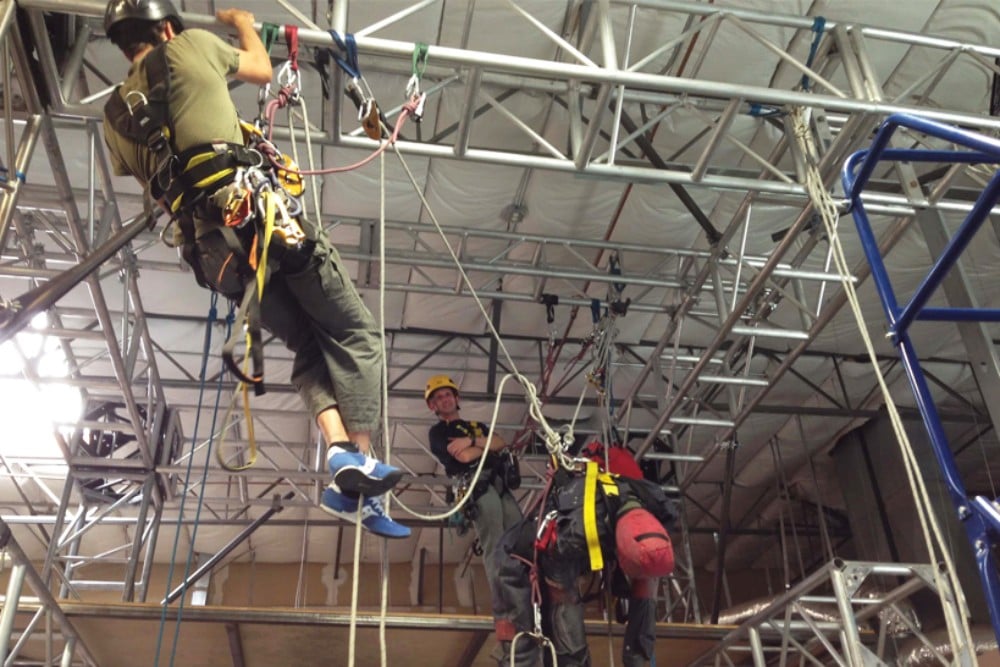
ON THE JOB SITUATIONS
Upon course completion, participants are prepared for the following real-world scenarios:
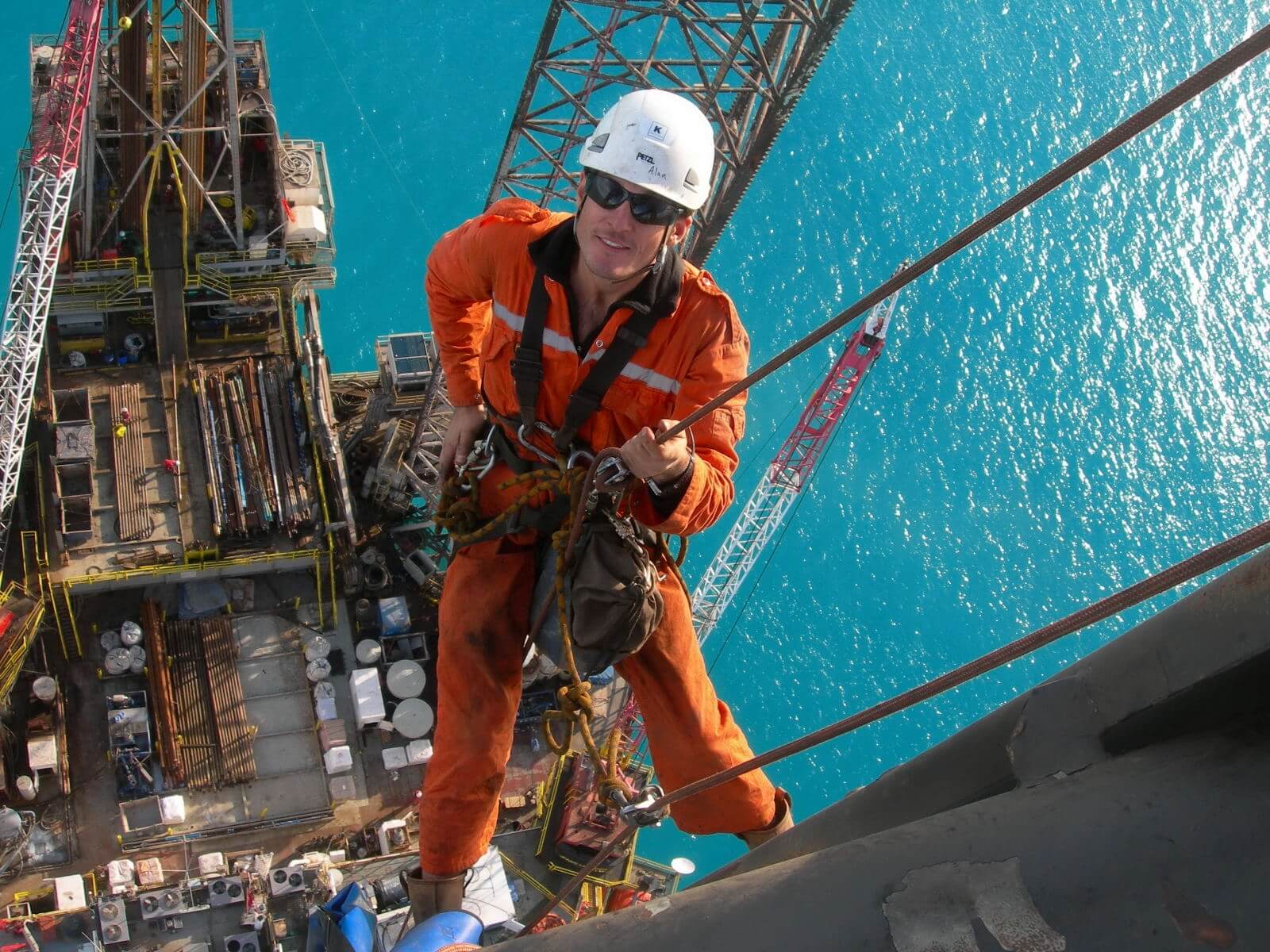
- Performing method statements and risk assessment activities
- Assessing project or worksite rope access safety
- Supervising teams of technicians working at height using rope access systems
- Capability to demonstrate maneuvers and skills to IRATA International Level I and 2 technicians
- Completing advanced rescue techniques and rescue management, which can include tensioned ropes, short link, rescue in descent passing a knot, breaking into a tight rope, and large re-belay, among others
- Performing pre-use equipment inspection
- Knowledge of equipment maintenance and management
- Thorough understanding of the IRATA Code of Practice
Frequently Asked Questions
How many hours do I need to upgrade to Level 3, and how must they be logged?
You must have a minimum of 1,000 hours of rope access work experience as an IRATA Level 2 technician, accrued over at least 12 months. Crucially, these hours must be recorded in your IRATA logbook and signed off by an IRATA Level 3 supervisor. Without these verified signatures, you cannot sit for the assessment.
My Level 2 certificate is about to expire. Can I still take the Level 3 course?
Yes, but you must complete your Level 3 assessment before your Level 2 certificate expires. If it has already expired, you must contact us immediately; IRATA has specific "expired technician" protocols that may require additional training days or a different assessment path.
Do I need a First Aid certificate before the course starts?
While you can take the training without it, you cannot legally work as an IRATA Level 3 Supervisor without a valid, industry-recognized First Aid certificate. We highly recommend having this in place before your course so you are "job-ready" the moment you pass your assessment.
What is the fail/pass rate, and what happens if I fail the Level 3 assessment?
Level 3 is a significant jump in responsibility, focusing heavily on rescue management and legislation. If you do not pass the independent assessment on day 5, IRATA allows for a re-assessment within 60 days. At Altius, our instructors focus on "pre-assessment" readiness during the first 4 days to ensure you are fully prepared for the independent examiner.
How much of the course is "classroom" vs. "on-rope"?
The Level 3 syllabus is approximately 60% practical (advanced rescues, rigging, hauling) and 40% theoretical (risk assessments, method statements, and IRATA ICOP/TACS knowledge). You will spend significant time mastering "paperwork" like Method Statements (RAMS), as this is a core duty of a supervisor.
Altius Technical Services is an IRATA-approved full trainer headquartered in Las Vegas, Nevada. We have industry-leading training centers conveniently located in Atlanta, Georgia, Houston, Texas, and New Orleans, Louisiana, in the United States of America, and Cape Town in South Africa.
OUR LOCATIONS
Get Started Today
Contact
Full Member of the Industrial Rope Access Trade Association - IRATA
EMS Safety - Emergency Care Training Certified Instructor
Corporate Member of The Society of Professional Rope Access Technicians - SPRAT
We live by our company motto of "Altius, Velocius, Tutius - Higher, Faster, Safer" in all aspects of our work, both operationally and in the training we provide.
